Technical Insights

Power Electronics Blog & Articles

In-depth technical guides, engineering innovations, and testing methodologies from AMETEK Programmable Power specialists.

AMETEK Technical Power Resources
Application Guides

Next-Gen Battery & EV Testing

Discover best practices for bidirectional power supply integration and regenerative grid simulation testing.
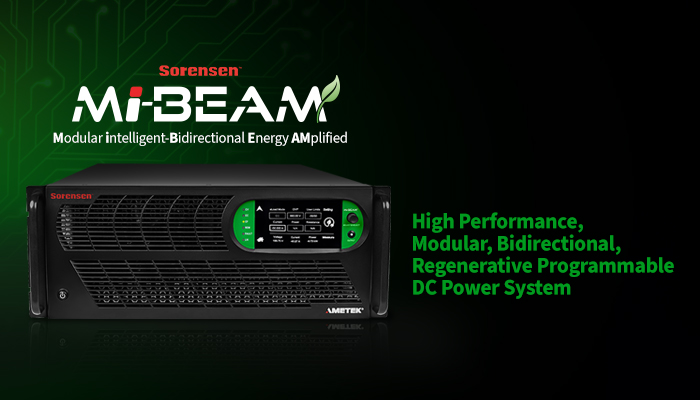
Bidirectional Power Testing Articles
Aerospace Engineering

Solar Array & Satellite Simulation

Learn how advanced MPPT algorithms and solar array simulators improve power subsystem testing for aerospace applications.
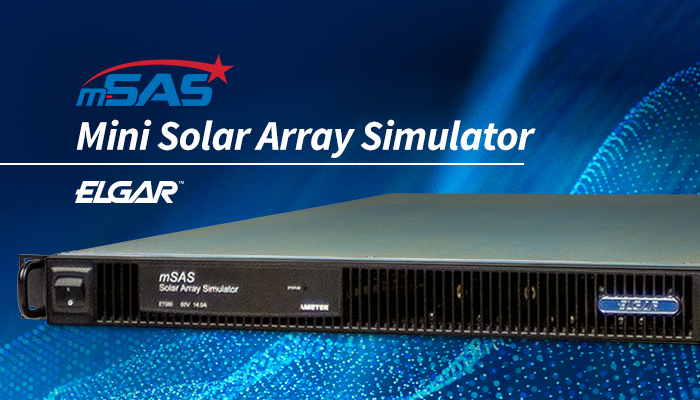
Space Power Subsystem Insights

Blog

10 Tips for Choosing DC Bench Power Supplies

10 Tips for Choosing DC Bench Power Supplies

Selecting DC Bench Power Supplies is more than comparing voltage ranges and front-panel displays. A dependable unit protects prototypes, shortens troubleshooting time, and supports repeatable measurements. It should deliver clean power at the stated load, not merely impressive numbers on a product page. In a real laboratory, a quiet fan, clear terminals, and stable output can matter as much as maximum wattage. Industry data supports this careful approach. The MarketsandMarkets 2024 Test and Measurement Equipment Market report identifies electronics development, semiconductor production, and automated testing as major growth areas. These applications increasingly require accurate, programmable, and connected instruments. Grand View Research’s power supply market analysis also highlights efficiency, regulation performance, and rising demand for compact laboratory equipment. Such reports describe broad market direction, not the needs of every bench. That distinction matters. A university lab may value overload protection and simple controls, while a production engineer may need remote programming and data logging. Engineers should also consider IEC 61010-1 safety requirements and measurement traceability practices described by NIST. Check the datasheet, then test the claims when possible. Look beyond peak output. Examine ripple, load regulation, transient response, cooling, calibration intervals, and isolation. A 30-volt supply with noisy output can undermine a sensitive sensor experiment. An inexpensive model may appear sufficient, yet its unstable display or slow protection response could waste hours. I have found that selection decisions are rarely perfect. However, a structured comparison reduces avoidable surprises and helps match the instrument to its actual workload.
Read more »
Sophia By:Sophia - October 10, 2026
Top 10 Terrestrial Photovoltaic Simulators Suppliers?

Top 10 Terrestrial Photovoltaic Simulators Suppliers?

The global photovoltaic market is expanding rapidly, increasing demand for accurate, repeatable testing equipment. IRENA’s Renewable Capacity Statistics 2024 reported more than 1.4 terawatts of installed solar capacity worldwide by the end of 2023. This scale makes reliable performance measurement increasingly important. Terrestrial Photovoltaic Simulators help manufacturers, laboratories, and certification teams reproduce controlled sunlight for module testing. They support measurements under defined irradiance, spectral, and temperature conditions. Small errors matter. This “Top 10 Terrestrial Photovoltaic Simulators Suppliers” overview examines suppliers through a practical, evidence-based lens. Key factors include IEC 60904-9 compliance, spectral match, temporal stability, spatial uniformity, test-area size, calibration traceability, and service support. The latest IEC 60904-9 edition also emphasizes clearer classification of simulator performance, helping buyers compare specifications more consistently. NREL’s photovoltaic research further demonstrates why repeatable laboratory conditions are essential when evaluating efficiency and degradation. Real experience suggests that a bright lamp alone is not enough. A stable flash, calibrated reference cell, and uniform test plane are equally important. The ranking should not be treated as absolute. A supplier may excel in high-throughput production lines but offer limited flexibility for research laboratories. Another may provide strong engineering support while carrying a higher ownership cost. These differences deserve attention. Pricing, delivery times, software usability, and regional maintenance can also change the final decision. This guide therefore combines technical evidence with practical purchasing considerations, while recognizing that published specifications do not always reveal long-term field performance. Buyer feedback and independent verification remain necessary. That is the part many comparisons overlook.
Read more »
Sophia By:Sophia - October 5, 2026
Top Space Solar Array Simulators for Global Buyers

Top Space Solar Array Simulators for Global Buyers

Space Solar Array Simulators are becoming essential tools for spacecraft manufacturers, research laboratories, and satellite integrators worldwide. These systems reproduce sunlight, electrical output, and changing orbital conditions inside controlled test environments. They help engineers evaluate solar panels before launch, when repair is rarely practical. A strong simulator must deliver stable irradiance, accurate spectral matching, and repeatable current-voltage measurements. It should also support different array sizes, test distances, and automation platforms. In real laboratories, engineers may compare a small triple-junction panel under simulated sunlight, then repeat the test after thermal cycling. Tiny calibration errors matter. They can distort efficiency results and weaken design decisions. John C. Mankins, a former NASA engineer and respected space solar power researcher, has stated, “The technical challenges are substantial, but none appears to be insurmountable.” His observation fits the simulator market well. Reliable equipment turns difficult testing into measurable evidence. However, no ranking is perfect. A simulator that performs well for a university laboratory may not suit a commercial spacecraft program. Buyers must examine lamp lifetime, uniformity, calibration records, cooling requirements, service support, and regional compliance. Cost matters. So does technical support. This guide compares leading Space Solar Array Simulators for global buyers. It considers laboratory experience, measurement reliability, integration flexibility, and long-term ownership value. Some product specifications remain difficult to compare directly. That limitation deserves attention. Transparent testing data is often more valuable than impressive marketing language, especially when a simulator will support expensive flight hardware.
Read more »
Emma By:Emma - September 30, 2026
How to Choose the Best Battery Simulators?

How to Choose the Best Battery Simulators?

Choosing the best Battery Simulators starts with a clear picture of the tests they must support. A unit for checking a small wearable device may not suit an electric vehicle power system. List the expected voltage and current ranges, battery types, channel count, and test duration before comparing models. Leave room for future requirements, but avoid paying for capacity your team will never use. Accuracy matters, yet the headline specification is only part of the story. Check measurement resolution, response time, ripple, and how the simulator handles sudden load changes. A quick voltage step can reveal behavior that a steady-state test misses. Look for programmable profiles, data logging, remote control, and software that engineers can use without fighting the interface. Small details matter. A confusing setup can slow an otherwise capable lab. Safety and reliability deserve equal attention. Review protective features such as overvoltage, overcurrent, and thermal protection, then confirm that the equipment fits your lab’s operating procedures. Ask about calibration, technical support, warranty terms, and how clearly the manufacturer documents limitations. If possible, test a representative waveform or duty cycle before purchase. A specification sheet cannot show every practical friction point. It may still be the best starting point, not the final answer. The right choice balances electrical performance, usable controls, dependable support, and total cost. This guide outlines how to compare those factors and select a simulator that suits real test conditions.
Read more »
Lila By:Lila - September 25, 2026
7 Best Battery Cyclers for Global Buyers?

7 Best Battery Cyclers for Global Buyers?

Choosing among the 7 Best Battery Cyclers for Global Buyers? requires more than comparing prices or channel counts. Battery Cyclers are precision instruments for charging, discharging, and recording cell performance. They reveal capacity fade, energy efficiency, cycle life, and thermal behavior under controlled conditions. A reliable system can expose a weak cell before it becomes an expensive production problem. That matters in laboratories, battery factories, universities, and quality-control departments. Dr. Jeff Dahn, a leading battery researcher, has stated, “The battery is the most important component in an electric vehicle.” His observation also applies to the equipment used to evaluate batteries. If the cycler produces unstable current, inaccurate voltage readings, or poor synchronization, the test results may mislead engineers. Small errors accumulate. They can distort a capacity curve or hide early degradation. This guide examines seven Battery Cyclers for international buyers. It considers channel count, current range, voltage accuracy, software usability, safety protection, calibration support, and after-sales service. It also considers export logistics and regional power requirements. A system that performs well in a Canadian laboratory may need different support in Southeast Asia or Europe. That detail is easy to overlook. No ranking is perfect. Buyer priorities differ. Some teams need high-current testing, while others require dense, low-current channels. I may favor measurement reliability over the lowest purchase price. That choice is debatable. Still, dependable data usually costs less than repeated testing, damaged cells, or uncertain engineering decisions. The right Battery Cycler should fit the test method, not merely the brochure.
Read more »
Lila By:Lila - September 20, 2026