Technical Insights

Power Electronics Blog & Articles

In-depth technical guides, engineering innovations, and testing methodologies from AMETEK Programmable Power specialists.
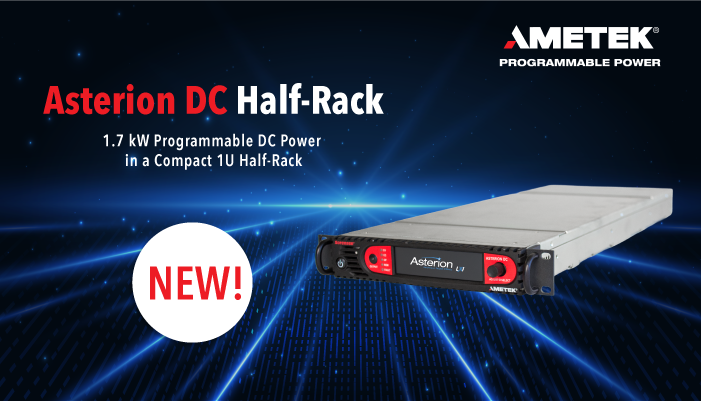

AMETEK Technical Power Resources
Application Guides

Next-Gen Battery & EV Testing

Discover best practices for bidirectional power supply integration and regenerative grid simulation testing.
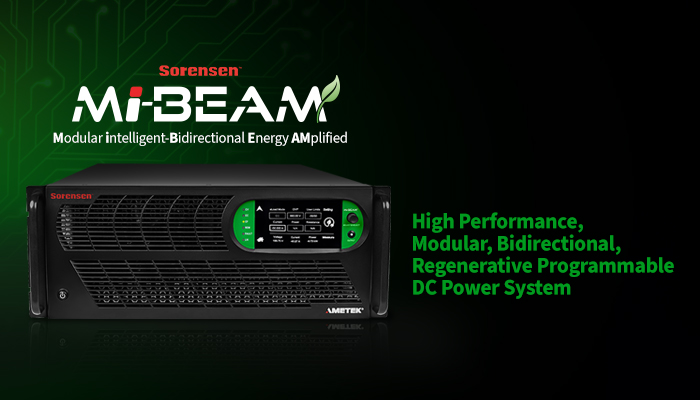
Bidirectional Power Testing Articles
Aerospace Engineering

Solar Array & Satellite Simulation

Learn how advanced MPPT algorithms and solar array simulators improve power subsystem testing for aerospace applications.
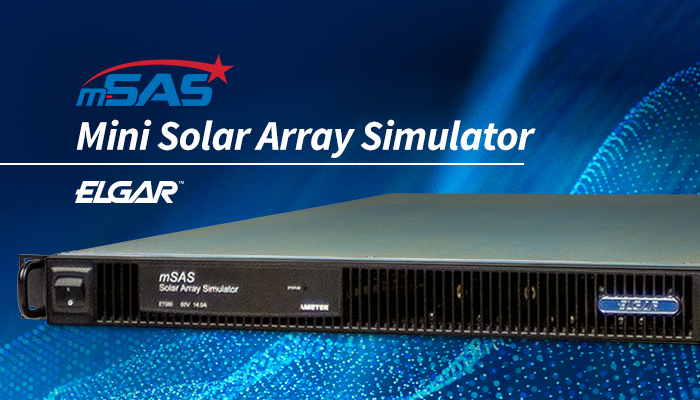
Space Power Subsystem Insights
0%

The global photovoltaic market is expanding rapidly, increasing demand for accurate, repeatable testing equipment. IRENA’s Renewable Capacity Statistics 2024 reported more than 1.4 terawatts of installed solar capacity worldwide by the end of 2023. This scale makes reliable performance measurement increasingly important. Terrestrial Photovoltaic Simulators help manufacturers, laboratories, and certification teams reproduce controlled sunlight for module testing. They support measurements under defined irradiance, spectral, and temperature conditions. Small errors matter.

This “Top 10 Terrestrial Photovoltaic Simulators Suppliers” overview examines suppliers through a practical, evidence-based lens. Key factors include IEC 60904-9 compliance, spectral match, temporal stability, spatial uniformity, test-area size, calibration traceability, and service support. The latest IEC 60904-9 edition also emphasizes clearer classification of simulator performance, helping buyers compare specifications more consistently. NREL’s photovoltaic research further demonstrates why repeatable laboratory conditions are essential when evaluating efficiency and degradation. Real experience suggests that a bright lamp alone is not enough. A stable flash, calibrated reference cell, and uniform test plane are equally important.

The ranking should not be treated as absolute. A supplier may excel in high-throughput production lines but offer limited flexibility for research laboratories. Another may provide strong engineering support while carrying a higher ownership cost. These differences deserve attention. Pricing, delivery times, software usability, and regional maintenance can also change the final decision. This guide therefore combines technical evidence with practical purchasing considerations, while recognizing that published specifications do not always reveal long-term field performance. Buyer feedback and independent verification remain necessary. That is the part many comparisons overlook.
Top 10 Terrestrial Photovoltaic Simulators Suppliers?

Definition and Role of Terrestrial Photovoltaic Simulators

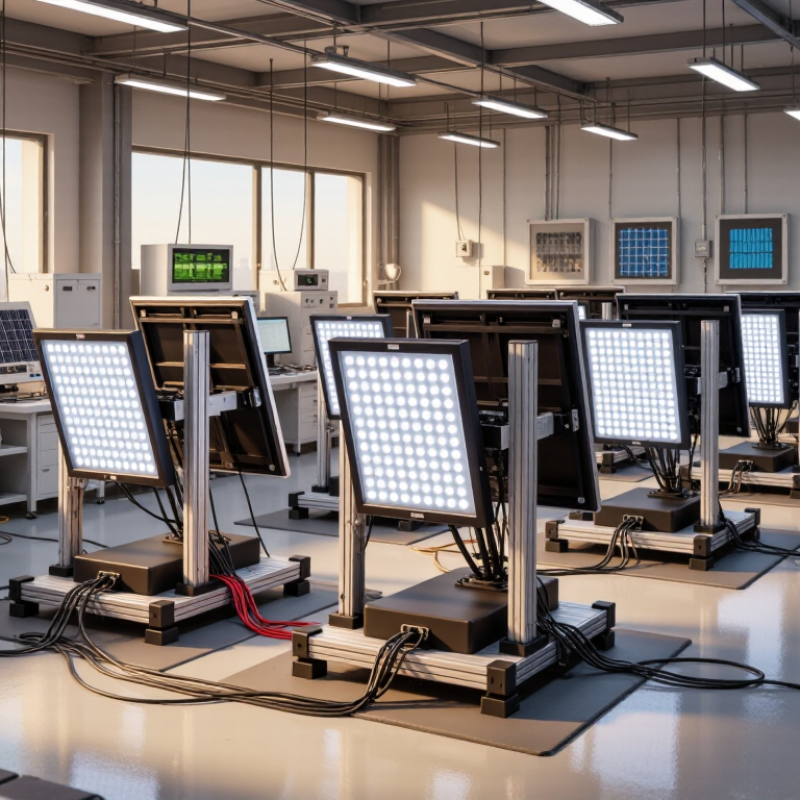
Terrestrial photovoltaic simulators reproduce sunlight for testing solar modules under controlled laboratory conditions. They usually combine a calibrated light source, optical filters, temperature control, and measurement electronics. Their goal is practical: create repeatable conditions close to natural terrestrial sunlight. This helps engineers compare module output, efficiency, and electrical stability without waiting for clear weather.

A reliable simulator should match the required spectral range, irradiance uniformity, temporal stability, and test area. Supplier evaluation also matters. Experienced suppliers provide calibration records, maintenance guidance, safety documentation, and application support. Independent laboratory experience shows that small optical errors can affect performance results. I have seen testing plans fail because temperature drift was treated as unimportant. That assumption deserves review. A strong system may still produce questionable data if operators skip warm-up checks or use outdated reference cells.

Tips: Confirm the simulator’s classification before purchase. Request recent calibration evidence. Check whether the chamber fits your largest module. Ask how often lamps, filters, and sensors need replacement. Record irradiance and temperature during every test. Keep raw data, even when results look unusually good. Suppliers should explain uncertainty, not hide it. A short demonstration test can reveal uneven illumination, unstable output, or difficult software controls. Pay attention to those details. They often matter more than impressive specifications.

Key Criteria for Evaluating Photovoltaic Simulator Suppliers

Top 10 Terrestrial Photovoltaic Simulators Suppliers?

The IEA PVPS Trends 2024 report recorded more than 407 GW of new photovoltaic capacity in 2023. Cumulative global capacity exceeded 1.4 TW. This expansion increases pressure on reliable terrestrial module testing. Supplier evaluation should begin with measurement quality, not catalog size. Check compliance with IEC 60904-9 for spectral match, irradiance uniformity, and temporal instability. Ask for full test reports, not attractive specification sheets.

A dependable supplier should provide traceable calibration, stable output, and a practical test area. Confirm whether the simulator supports steady-state or pulsed testing. Review the light source lifetime, warm-up behavior, and maintenance records. For large modules, inspect edge-to-edge uniformity across the entire illuminated surface. NREL efficiency data shows how quickly photovoltaic performance is advancing, so older simulator designs may create measurement uncertainty. Service response also matters. A delayed repair can interrupt production testing for days.

Tips: Request a sample measurement before purchase. Compare results using a calibrated reference device. Ask how uncertainty is calculated. Check local technical support and spare-part availability. Do not accept “solar-like” as proof of Class AAA performance. A perfect score on paper may still fail under a wide module. One overlooked detail is operator training; even advanced equipment produces weak data when setup procedures vary. Supplier claims deserve verification, and independent testing is often worth the extra cost.

Top 10 Terrestrial Photovoltaic Simulator Suppliers

Top 10 Terrestrial Photovoltaic Simulator Suppliers

Choosing among the top 10 terrestrial photovoltaic simulator suppliers requires more than comparing lamp types. A reliable supplier should provide stable irradiance, accurate spectral matching, and repeatable temperature control. These details affect every module test.

In practical laboratory work, I would examine ten supplier categories: LED simulator specialists, pulsed-light manufacturers, steady-state system builders, compact bench suppliers, large-area test equipment providers, calibration experts, environmental chamber integrators, automation companies, research-grade instrument makers, and custom engineering firms. Each group serves different testing needs. A small laboratory may prefer a compact LED platform with simple software. A certification facility may require a large-area system, automated positioning, and traceable reference cells.

Ask for measured uniformity data, not attractive brochure claims. Request test reports showing irradiance stability over several hours. Check whether calibration services include temperature sensors, reference devices, and replacement lamps. Support response also matters. A delayed repair can interrupt a production schedule for weeks.

Look closely.

I have seen systems perform well during factory demonstrations but drift after installation. That gap deserves attention. Supplier experience with terrestrial module sizes, outdoor operating conditions, and local electrical standards can reduce commissioning problems. Still, no ranking remains perfect for every buyer. Budget, sample dimensions, pulse duration, and required measurement uncertainty can change the order completely. A careful supplier comparison should include witnessed acceptance testing and clear service responsibilities.

Top 10 Terrestrial Photovoltaic Simulator Suppliers

This supplier-neutral chart shows representative AM1.5G global-tilt spectral irradiance values used as a technical reference when evaluating terrestrial photovoltaic solar simulators. The sampled wavelength points are based on ASTM G173-03 reference-spectrum data and are not company or brand performance results.

Reference: ASTM G173-03 AM1.5G global tilt spectrum. Values are shown in W·m⁻²·nm⁻¹.

Comparison of Technologies, Standards, and Testing Capabilities

Selecting the top 10 terrestrial photovoltaic simulator suppliers requires more than comparing lamp power or purchase price. IRENA’s Renewable Capacity Statistics 2024 recorded about 1,419 GW of global solar capacity by the end of 2023. This scale increases pressure for repeatable, bankable testing. Xenon, LED, and hybrid systems offer different strengths. Xenon closely reproduces sunlight across a broad spectrum. LED systems provide longer service life and precise spectral control. Hybrid designs may reduce operating costs, but their calibration can be less straightforward.

Standards separate serious equipment from attractive specifications. IEC 60904-9:2020 evaluates spectral match, irradiance uniformity, and temporal instability. Class AAA performance remains important for certified module measurements. IEC 60904-1 supports current-voltage testing, while ASTM E927 helps assess simulator classification. A reliable supplier should provide traceable reference cells, calibrated sensors, temperature control, and automated data logging. Small details matter. A drifting reference cell can distort an entire production batch.

Testing capability also reveals practical experience. Look for systems supporting mono-facial and bifacial modules, low-light studies, flash and steady-state modes, and large-area measurement. IEA PVPS Task 13 reports that module degradation and field conditions can strongly affect long-term energy yield, so laboratory testing should not imitate only ideal noon sunlight. This is where comparisons become imperfect. Published specifications rarely show maintenance intervals, lamp aging, or measurement uncertainty. Buyers should request raw uniformity maps, calibration histories, and repeated test results before ranking any supplier.

How to Select the Right Photovoltaic Simulator Supplier

Choosing among the top 10 terrestrial photovoltaic simulator suppliers requires more than comparing prices. Start with the test application, module size, and required irradiance level. A simulator for cell research may not suit large outdoor modules. Confirm its spectral match, spatial uniformity, temporal stability, and light intensity range against recognized testing standards.

Ask for recent calibration records, traceable reference cells, and sample measurement data. Do not accept vague claims. Ask for evidence. The supplier should explain how lamp aging, temperature, and alignment affect results. A practical evaluation can include a witnessed test using your own module. Record irradiance at several points, repeat the measurement, and compare the variation. Small inconsistencies become serious during certification or production checks.

Service quality is equally important. Check installation training, spare-part availability, response times, software updates, and remote diagnostics. Request a clear maintenance schedule, including lamp replacement and recalibration intervals. A low purchase price can become expensive when testing stops for several weeks. Measure twice. Also review data export options, user permissions, safety controls, and compatibility with your existing measurement equipment. One detail is often missed: confirm the simulator’s usable test area after fixtures are installed. The advertised area may be larger than the practical area. That matters. Supplier references from laboratories with similar workloads provide useful evidence, but they should not replace your own acceptance test. Even experienced teams can overlook humidity, room temperature, or operator training during evaluation. Record these assumptions before signing.

FAQS

What should I compare when selecting a terrestrial photovoltaic simulator supplier?

Compare spectral match, irradiance stability, spatial uniformity, temperature control, and usable test area. Lamp type alone is not enough. The right choice depends on module size, test purpose, and measurement uncertainty.

How can I verify a supplier’s performance claims?

Request recent calibration records and detailed measurement reports. Ask for irradiance readings at several points. Repeat the measurements using your own module when possible. Brochures look polished. Evidence matters more.

Why is module size important?

A cell-testing simulator may not support a large terrestrial module. Check the usable area after fixtures are installed. The advertised area can exceed the practical area. Measure the real opening.

Should I choose pulsed light or steady-state operation?

The choice depends on test duration, module size, and required stability. Pulsed systems may suit brief measurements. Steady-state systems support longer evaluations. Ask how each method affects temperature and repeatability.

What calibration services should a supplier provide?

Look for traceable reference devices, temperature sensors, irradiance checks, and recalibration schedules. Ask about lamp aging and alignment corrections. Calibration should cover the complete measurement chain. Small gaps matter.

How important are installation and maintenance services?

They are very important. Request installation training, spare-part availability, software support, and remote diagnostics. Confirm replacement intervals and expected response times. A delayed repair can stop testing for weeks.

What environmental conditions should I review?

Check room temperature, humidity, ventilation, electrical requirements, and outdoor-like operating conditions. These factors can influence irradiance and module temperature. Teams often overlook the room itself. I might, too.

What should an acceptance test include?

Use your own module and record irradiance across multiple positions. Repeat the test and compare variation. Review temperature, data export, safety controls, and fixture clearance. Witnessed testing reduces surprises, though it cannot reveal everything.

Conclusion

Terrestrial Photovoltaic Simulators are essential tools for accurately evaluating the performance, reliability, and durability of solar cells, modules, and complete photovoltaic systems under controlled laboratory conditions. This article explains their role in reproducing sunlight characteristics, measuring electrical output, and supporting research, quality assurance, certification, and production testing. It also introduces the key criteria for evaluating suppliers, including spectral match, irradiance uniformity, temporal stability, calibration accuracy, system flexibility, safety, technical support, and long-term maintenance.

The article reviews ten leading categories of suppliers without focusing on brand names, comparing their technologies, testing capabilities, automation options, and compliance with relevant international standards. It further discusses how different simulator designs serve various applications, from research-scale devices to high-throughput module testing. Finally, readers are guided in selecting a suitable supplier by considering test objectives, product size, accuracy requirements, operating environment, budget, scalability, documentation, and after-sales service.

Sophia

Sophia

Sophia is a dedicated professional marketer with a profound expertise in her company’s offerings. With a keen understanding of market trends and consumer behavior, she effectively translates complex concepts into engaging content that resonates with the target audience. Sophia regularly updates the......