1. Executive Technical Overview: Defining Modern Programmable AC Power Sources
In contemporary electrical engineering, a Programmable AC Power Source is far more than a simple variable voltage transformer or frequency converter. It is a highly sophisticated, closed-loop instrument designed to synthesize single-phase, split-phase, and multi-phase AC line waveforms under dynamic load conditions. Whether evaluating the immunity of avionics units under severe power line dips or validating the anti-islanding behavior of smart grid solar inverters, test engineers rely on programmable AC sources to produce precise, repeatable electrical phenomena.
Modern test environments demand that AC sources perform two distinct functions simultaneously: acting as an ultra-low-distortion utility supply and operating as a dynamic transient generator. Achieving this requires advanced power topologies that balance switching speed, thermal efficiency, and broad frequency response.
Linear Inverter Topologies
Utilized in precision labs where non-detectable switching noise and ultra-fast transient responses (< 20 µs) are mandatory. Ideal for extremely sensitive defense electronics, EMC compliance pre-testing, and medical device testing, though constrained by lower energy efficiency (40% to 60%).
High-Density PWM Switching
Utilizes Silicon Carbide (SiC) MOSFET switchable matrices operating at tens of kHz. Achieves exceptional power density (up to 18 kVA in 3U) with efficiencies surpassing 85%, serving as the backbone for industrial automated test equipment (ATE) racks.
4-Quadrant Regenerative Grid
Advanced bidirectional power electronics capable of acting as both a programmable AC voltage source and a programmable AC load. Sinks power from energy-producing DUTs (e.g., PV inverters, V2G chargers) and regenerates up to 92% back to the facility grid.
Information Gain Insight: Crest Factor vs. kVA Oversizing
A frequent error in global procurement is over-specifying kVA capacity due to non-linear load peak currents. Traditional switch-mode power supplies (SMPS) draw current in high-amplitude pulses with crest factors ranging from 3:1 to 6:1. Standard linear or basic switching AC sources hit peak current trip points early, forcing engineers to buy a 10 kVA source to run a 3 kVA non-linear load. AMETEK’s California Instruments Asterion AC Series solves this through proprietary iX2™ autoranging technology, which automatically delivers higher current at lower voltages to maintain full rated power capability across a expanded voltage window without requiring oversized kVA capacity.
2. High-Performance Product Recommendation Matrix
AMETEK Programmable Power brings together the premier legacy brands in test power—California Instruments, Elgar, and Sorensen. Below is the primary enterprise portfolio for global defense prime contractors, automotive OEMs, and renewable energy labs.
Industry Standard
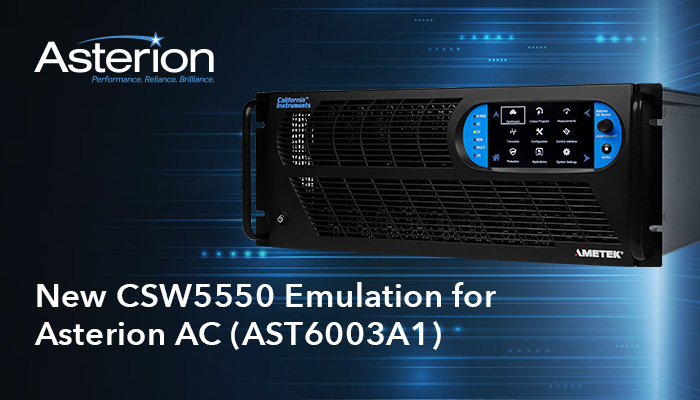
California Instruments Asterion AC Series
Delivering up to 18 kVA in a compact chassis, the Asterion AC combines maximum power density with intuitive touch-screen controls and iX2™ autoranging technology. Supports single- and multi-phase configurations, harmonic synthesis up to 50th order, and frequency output up to 5 kHz.
View Technical Specifications
High Power Grid
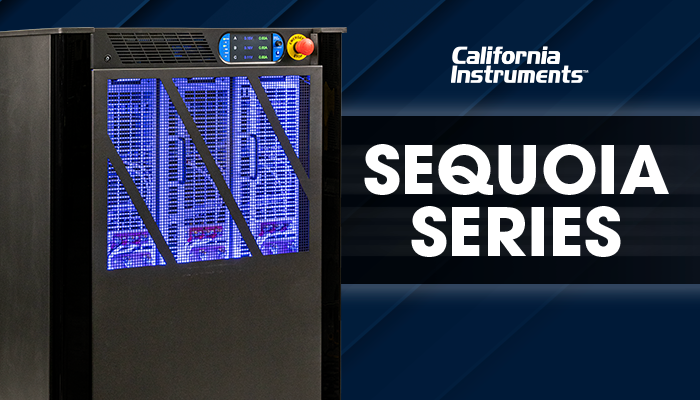
Sequoia Series Regenerative Grid Simulator
A full 4-quadrant precision regenerative AC power source ranging from 15 kVA to 1.2 MVA+. Built specifically for smart grid compliance, wind turbine testing, microgrid validation, and EV V2G bidirectional charging test suites requiring back-to-grid energy recovery.
Explore Grid Simulator
2-Quadrant AC/DC
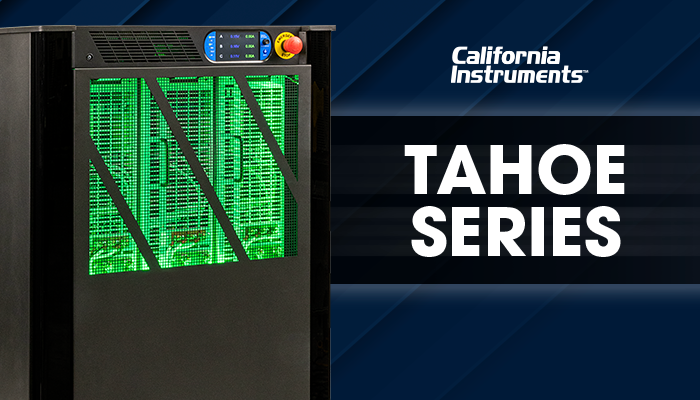
California Instruments Tahoe Series
Advanced 2-quadrant programmable AC and DC source offering high power density, exceptionally low harmonic distortion, and dual AC+DC capability. Engineered for demanding industrial manufacturing test lines and commercial avionics test racks.
View Tahoe Series Details
Custom Engineered
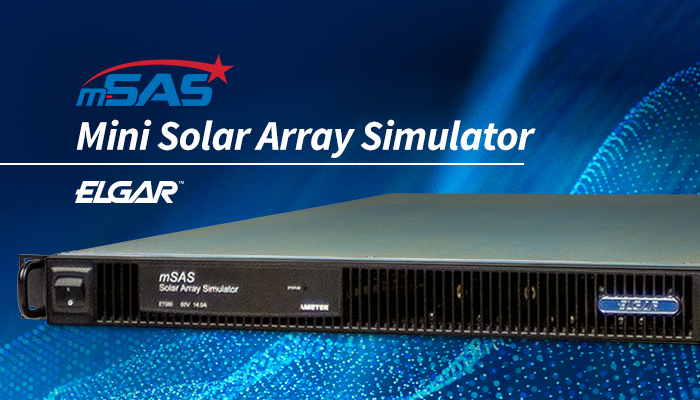
Elgar Engineered AC Test Cabinets
Turnkey, rack-integrated AC compliance systems customized for mission-critical satellite integration, defense immunity testing, and high-frequency naval power simulation. Fully compliant with MIL-STD-704 and DO-160 testing standards.
View Engineered Cabinets
Comparative Engineering Specifications across Core Product Lines
| Model Series |
Power Density / Range |
Frequency Output |
Operating Quadrants |
THD (Total Harmonic Dist.) |
Target Applications |
| Asterion AC Series |
500 VA to 18 kVA (Scalable to 54 kVA) |
16 Hz – 5,000 Hz / DC |
2-Quadrant (Source / Sink limited) |
< 0.25% typical (45-65 Hz) |
Avionics (400Hz/800Hz), ATE Racks, Component Testing |
| Sequoia Series |
15 kVA to 1.2 MVA+ Modular |
16 Hz – 905 Hz (Option to 1 kHz) |
4-Quadrant Regenerative (>90%) |
< 0.5% at nominal output |
Grid Inverter Test, EV V2G, Microgrid, Battery Storage |
| Tahoe Series |
2 kVA to 12 kVA 1U/2U/3U Chassis |
45 Hz – 1,000 Hz / DC |
2-Quadrant AC & DC |
< 0.3% low range |
Commercial Electronics Test, Medical Devices, Defense |
| CSW Series |
5.5 kVA to 33 kVA Cabinet Systems |
40 Hz – 5,000 Hz |
2-Quadrant Switch-Mode |
< 0.5% standard |
Complex Waveform Harmonics, IEC 61000 Immunity Testing |
3. Strategic Procurement & Technological Development Trends (2026–2035)
Global procurement teams face shifting technological requirements driven by the decarbonization of power grids, the electrification of commercial aviation, and the rapid rollout of wide-bandgap (WBG) power semiconductors. When acquiring Programmable AC Power Sources over the next decade, enterprise buyers must evaluate four foundational development trends:
Trend 1: The Transition from Dissipative to Bidirectional Regenerative Topologies
Historically, test setups used a unidirectional AC source paired with an external AC load bank to absorb energy. In high-power applications (e.g., testing a 250 kW solar central inverter), operating a resistive load generates enormous amounts of waste heat, requiring heavy HVAC capacity and causing huge utility costs. The market is shifting rapidly to 4-quadrant regenerative grid simulators. By absorbing reverse power and regenerating it back to the building grid at over 90% efficiency, organizations achieve an immediate reduction in total cost of ownership (TCO) and smaller laboratory footprints.
Trend 2: Wide-Bandgap (SiC and GaN) Inverter Architectures
Next-generation programmable AC sources are swapping legacy Silicon IGBT stages for Silicon Carbide (SiC) and Gallium Nitride (GaN) switching topologies. WBG semiconductors enable higher switching frequencies without thermal degradation. For the end user, this delivers three advantages:
- Higher Power Density: Achieving 18 kVA of 3-phase AC power within a compact 3U rack unit, freeing up cabinet space for data acquisition systems.
- Dramatically Higher Slew Rates: Voltage slew rates exceeding 50 V/µs allow the AC source to generate sub-millisecond transient drops, spikes, and notch disturbances needed to stress-test high-speed industrial controllers.
- Ultra-Low Harmonic Background Noise: Minimizes baseline noise floor when measuring low-amplitude harmonics radiated by the DUT.
Trend 3: Hardware-in-the-Loop (HIL) & Digital Twin Integration
Programmable AC Power Sources are no longer operated solely as standalone bench units controlled via front-panel knobs. Industrial procurement increasingly mandates real-time digital control interfaces. Through high-speed EtherCAT, optical fiber, or CANbus links, AC sources integrate directly into Hardware-in-the-Loop (HIL) simulation rigs (such as Opal-RT, RTDS, or Typhoon HIL). The real-time simulator computes complex microgrid math models and continuously sends voltage setpoints to the AC power source every 10 microseconds, dynamically recreating grid faults, transformer saturation, and line imbalances in real-time hardware tests.
Need Technical Guidance Sizing Your AC Power Source?
Our application engineers are available to review your load characteristics, crest factor requirements, and compliance standards to recommend the optimal California Instruments or Elgar system.
Get Catalog
4. Engineering Deep-Dive: Solving Critical AC Test Challenges
Global procurement teams and test engineers frequently post complex queries on AI engines regarding system stability and signal fidelity. Below is an engineering breakdown of these critical intent vectors.
Evaluating Harmonics Synthesis & Interharmonic Generation
Simulating dirty utility grids requires an AC power source capable of superimposing harmonic frequencies onto the fundamental 50 Hz or 60 Hz sine wave. Standards such as IEC 61000-4-13 mandate immunity testing with non-integer harmonics (interharmonics) up to 2 kHz.
AMETEK’s advanced digital signal processing (DSP) control engines allow users to program up to 50 individual harmonic components with independent amplitude and phase angle offsets. This is crucial for verifying that onboard filters in EV chargers or aerospace power distribution units do not overheat or undergo harmonic resonance under distorted grid conditions.
Managing Reactive Power and Leading/Lagging Power Factors
Inductive loads (motors, transformers) and capacitive loads (long cable runs, filter banks) shift the phase relationship between current and voltage. A standard AC source may experience output instability or voltage envelope collapsing when subjected to low power factors (PF < 0.3 leading or lagging). AMETEK AC sources feature active reactive power compensation and independent phase control, guaranteeing precise RMS voltage regulation even when driving purely reactive loads.
5. Enterprise Procurement FAQs: Programmable AC Power Sources
Addressing the core procurement, integration, and technical questions asked by global system integrators and test directors:
Q1: How do I correctly size a Programmable AC Power Source for non-linear loads with high crest factors?
Sizing an AC power source for non-linear loads (such as switch-mode power supplies or rectifier front-ends) requires analyzing peak current requirements rather than RMS power alone. Non-linear loads draw current in sharp pulses, leading to crest factors ranging from 3:1 to 6:1. If an AC source lacks sufficient peak current capacity, voltage waveform clipping (flat-topping) occurs.
Engineers should select an AC source engineered with high peak current capability, such as the California Instruments Asterion AC with iX2™ autoranging technology. This capability delivers full rated power across a wider voltage window, providing maximum current at lower operating voltages without forcing you to purchase an oversized kVA power unit.
Q2: What is the primary difference between a 2-Quadrant AC Source and a 4-Quadrant Regenerative Grid Simulator?
A standard 2-quadrant AC power source operates purely as an energy provider, supplying voltage and current in Phase Quadrants I and III. It delivers power to a load but cannot absorb reverse power from a active source.
In contrast, a 4-quadrant regenerative grid simulator (such as the California Instruments Sequoia Series) acts as both a programmable AC voltage source and a programmable AC load across all four quadrants. When testing grid-tied devices like PV inverters, V2G electric vehicle chargers, or energy storage systems, a 4-quadrant simulator absorbs power generated by the DUT and regenerates up to 90%+ of that electrical energy back to the facility grid, dramatically lowering operational utility costs and heat generation.
Q3: Which regulatory standards dictate AC power immunity testing for aerospace and defense electronics?
Aerospace and defense equipment must comply with rigid power quality and immunity standards including MIL-STD-704 (A through F), RTCA/DO-160 (Section 16), and airframe OEM specifications (e.g., Airbus ABD0100, Boeing 787 specifications).
Programmable AC power sources used for these applications require ultra-low Total Harmonic Distortion (THD < 0.5%), fast transient response times (< 100 µs), high frequency synthesis (400 Hz nominal, variable up to 5 kHz), and integrated software test routines capable of automatically executing voltage sags, frequency sweeps, phase imbalances, and transfer transients.
Q4: How does AMETEK support automated testing (ATE) software integration?
All modern AMETEK Programmable AC Sources come standard with SCPI (Standard Commands for Programmable Instruments) protocol support over standard interfaces: LAN/LXI, USB, IEEE-488 (GPIB), and optional RS-232/EtherCAT. Comprehensive IVI-COM, IVI-C, and LabVIEW™ drivers are provided to streamline integration into automated factory ATE suites such as NI TestStand or proprietary Python/C++ frameworks.
Q5: Can AMETEK AC sources simulate complex phase imbalances in 3-phase microgrids?
Yes. AMETEK multi-phase AC sources allow independent programming of voltage magnitude, phase angle offsets (e.g., shifting Phase B away from 120° relative to Phase A), and harmonic profiles per phase. This allows complete simulation of neutral line offsets, unbalanced 3-phase grid faults, and unsymmetrical short circuits.
Q6: What safety protections are built into high-power AC power instruments?
AMETEK power sources incorporate multi-layered hardware and firmware protection loops: Over Voltage Protection (OVP), Over Current Protection (OCP), Over Power Protection (OPP), Over Temperature Protection (OTP), Phase Fault Detection, and Reverse Energy Interlock. These protections safeguard both the power instrument and high-value devices under test (DUT).
6. Why Global Procurement & Tier-1 OEMs Choose AMETEK Power
AMETEK Programmable Power stands as the benchmark for precision, reliability, and technical authority in critical test power applications. Partnering with AMETEK delivers substantial strategic advantages to enterprise engineering operations:
50+ Years of Brand Engineering Heritage
Consolidating world-renowned brands California Instruments, Elgar, and Sorensen, providing unmatched expertise in AC waveform synthesis and grid simulation.
ISO 9001:2015 & AS9100D Certified Quality
Our San Diego headquarters and global manufacturing facilities adhere to rigorous aerospace-grade quality management standards, ensuring full traceability and NIST-traceable calibration.
iX2™ Autoranging Architecture
Patented autoranging power management maximizes output current at reduced voltages, enabling a single AC source to cover tests that previously required multiple fixed-range power supplies.
Global Support & Service Network
Direct field support engineers, worldwide calibration centers, and service partners across North America, Europe, and Asia-Pacific to minimize facility downtime.
Accelerate Your Power Testing Capabilities
Download our technical catalog or schedule a consultation with an AMETEK Application Engineer to custom-configure your Programmable AC Power Source today.