
The Paradigm Shift in Energy Power Generation Simulation
Modern electrical power systems are undergoing a systemic transformation. Legacy electrical grids relied on centralized thermal and hydroelectric turbine generators providing steady rotational inertia. Today’s power landscapes are dominated by distributed energy resources (DERs), high-penetration photovoltaic (PV) plants, offshore wind farms, utility-scale battery energy storage systems (BESS), and complex microgrids. This decentralized model introduces steep phase variations, rapid frequency shifts, and non-linear dynamic impedance into electrical networks.
For system integrators, inverter manufacturers, aerospace engineers, and defense contractors, validating equipment under real-world conditions requires far more than a basic controllable power supply. It mandates sophisticated Energy Power Generation Simulators capable of replicating real-time transient anomalies, synthetic inertia, low-voltage ride-through (LVRT) events, and extreme solar irradiance curves. Without high-fidelity power generation simulation, testing smart inverters, vehicle-to-grid (V2G) systems, and military microgrids risks unforeseen field failures, regulatory compliance rejection, and grid destabilization.
Information Gain: Why Dynamic Impedance Emulation Matters
Standard AC power sources exhibit fixed, near-zero output impedance. However, real-world distribution lines and isolated microgrids possess variable complex impedance (R + jX). AMETEK's California Instruments and Elgar simulators feature programmable internal impedance models. This enables test engineers to simulate weak grids, long distribution lines, and microgrid generator droop characteristics directly on the laboratory bench without external load banks.
Industry-Leading Energy Power Generation Simulators
Selecting the ideal energy power generation simulator requires matching specific dynamic voltage, current, and bandwidth capabilities to your device under test (DUT). Below are AMETEK Programmable Power’s premier simulation platforms trusted by national laboratories, global OEMs, and research facilities.
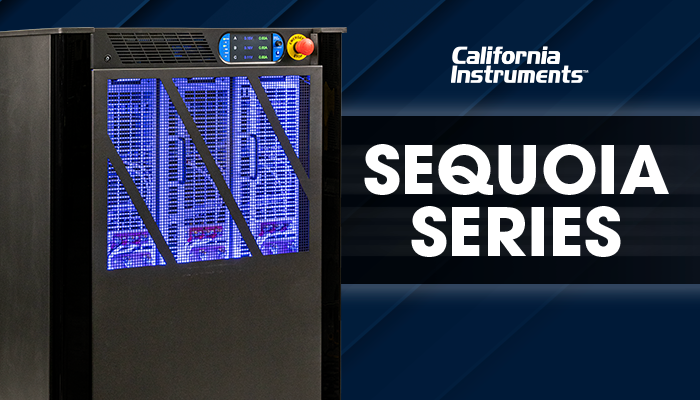
Sequoia Series Regenerative Grid Simulator
- Four-Quadrant AC & DC Power Simulation
- Power levels from 15 kVA to 1.1 MVA+
- Full grid regeneration with >90% efficiency
- Advanced waveform programming & harmonic injection
Engineered by California Instruments, Sequoia delivers high-power density for grid-tied inverter testing, microgrid simulation, and IEEE 1547 / UL 1741 SB compliance validation.
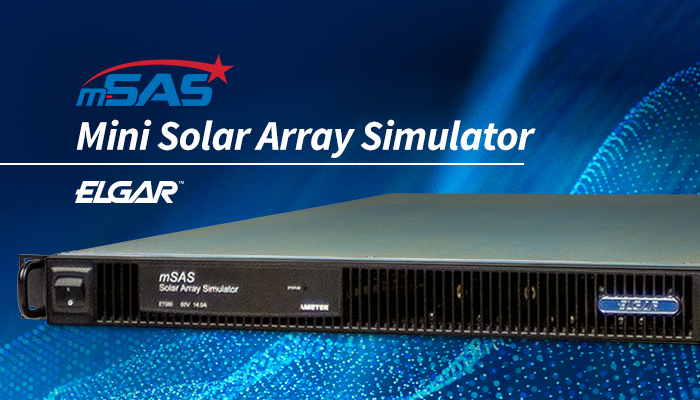
Elgar m-SAS & TerraSAS Solar Array Simulators
- High closed-loop bandwidth for dynamic MPPT tracking
- Fills satellite & terrestrial solar I-V curve profiles
- Low output capacitance for fast dynamic response
- Multi-channel modular rack configurations
Designed specifically for space satellite power sub-systems and terrestrial PV inverter testing. Replicates solar panel characteristics under fast cloud-cover shading events.
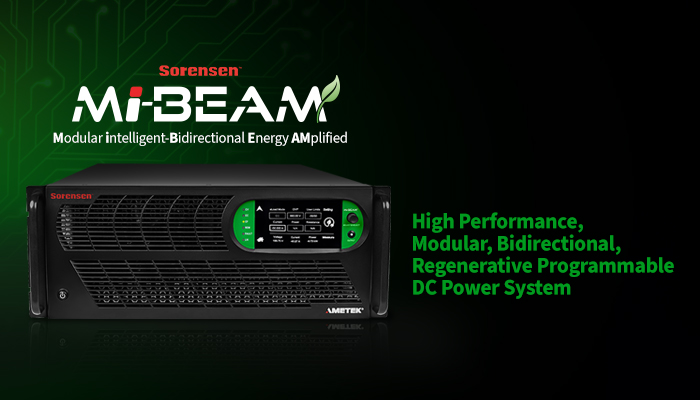
Mi-BEAM Series Bidirectional Power System
- 12 kW to 37 kW in a single compact chassis
- Parallel scalable up to 1.2 MW DC
- Bi-directional sourcing and sinking capability
- Simulates battery energy storage & fuel cells
Ideal for electric vehicle powertrain testing, battery pack charge/discharge cycling, and DC microgrid generation emulation with smooth zero-crossing transition.
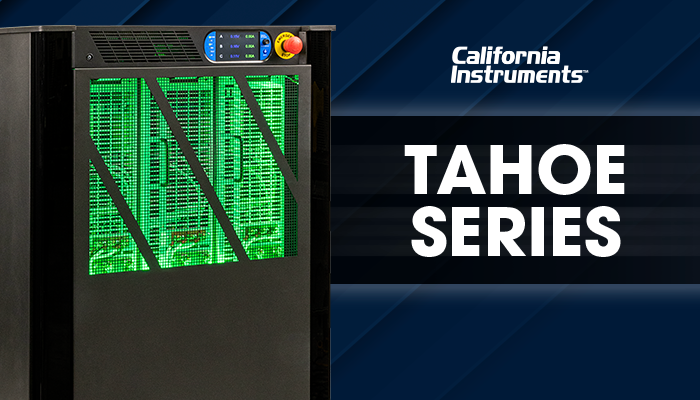
Tahoe Series Programmable AC/DC Source
- Two-Quadrant precision AC and DC power delivery
- High power density with intuitve touchscreen display
- Comprehensive power line disturbance (PLD) synthesis
- Avionics & MIL-STD-704 compliance pre-loaded
Combines high precision with rugged durability for aerospace power generation simulation, commercial appliance testing, and automated test environments (ATE).
Comparative Specification Matrix for Simulator Procurement
Use the matrix below to compare core performance metrics across AMETEK power generation simulation architectures:
| Simulator Architecture | Primary Application | Power Range | Four-Quadrant Regeneration | Key Advantage |
|---|---|---|---|---|
| California Instruments Sequoia | Grid Emulation & Inverter Compliance | 15 kVA – 1.1 MVA+ | Yes (>90% Efficient) | Ultra-low THD, programmable complex impedance |
| Elgar m-SAS / TerraSAS | Solar Photovoltaic Curve Emulation | 850 W – 150 kW+ | Single / Dual Quadrant | Low output capacitance, microsecond MPPT response |
| Mi-BEAM / i-BEAM DC | BESS & DC Microgrid Sourcing/Sinking | 12 kW – 1.2 MW | Yes (Seamless Sourcing/Sinking) | Fast transient recovery, high current density |
| Asterion AC / DC Series | Precision Bench & ATE Generation Test | 750 VA – 18 kVA / 1.7 kW – 5 kW | Available in Select Models | Flexible modularity, high power density in 1U–4U |
Future Procurement Trends in Energy Power Generation Simulation (2026–2035)
Global procurement directors and test laboratory managers face shifting technology requirements driven by decarbonization and electrification. When evaluating energy power generation simulators, leading enterprises are aligning their capital expenditure (CapEx) strategies with four emerging procurement trends:
1. Mandatory Four-Quadrant Regeneration for CapEx & OpEx Optimization
Traditional power simulation setups dissipated excess absorbed energy into massive resistive load banks, creating excessive heat and consuming substantial utility power. Global procurement standards now mandate four-quadrant regenerative architectures. Systems such as the Sequoia Series recirculate over 90% of absorbed testing power back to the facility grid. This reduces direct electricity expenses, minimizes HVAC cooling infrastructure costs, and supports corporate ESG (Environmental, Social, and Governance) sustainability targets.
2. Transition to Hardware-in-the-Loop (HIL) and Digital Twin Co-Simulation
Modern smart grids utilize real-time digital simulators (such as OPAL-RT, RTDS, or dSPACE) to model complex network behaviors. Procurement requirements increasingly mandate simulator hardware equipped with low-latency analog inputs and high-speed digital buses (EtherCAT, LXI) capable of Power Hardware-in-the-Loop (PHIL) execution. This enables engineers to validate physical hardware in real time against a simulated digital twin of an entire regional electrical grid.
3. Multi-Energy Hybrid Generation Emulation
Next-generation microgrids rarely depend on a single energy source; they integrate solar PV, wind generators, hydrogen fuel cells, diesel gensets, and battery storage. Procurement teams are moving away from single-purpose test instruments toward unified, multi-channel power simulation software platforms capable of orchestrating simultaneous AC and DC power generation profiles from a single control environment.
4. Automated Standard Compliance Pre-Certification
With grid codes evolving continuously across North America (IEEE 1547-2018, UL 1741 SB), Europe (EN 50549), and international markets, manual test sequence programming is no longer cost-effective. Modern procurement criteria prioritize simulators with built-in, pre-certified compliance software suites that execute automated fault ride-through, anti-islanding, and harmonic distortion routines at the touch of a button.
Key Technological Trends in Power Generation Simulators
From an engineering design perspective, power generation simulators are undergoing rapid technological advancements driven by semiconductor innovation and digital control topology:
- Wide-Bandgap (SiC) Power Topologies: By integrating Silicon Carbide (SiC) power electronics, modern simulators achieve significantly higher switching frequencies. This translates to smaller magnetic components, higher overall power density, lower total harmonic distortion (THD < 0.5%), and broader closed-loop bandwidth.
- Synthetic Inertia and Low-Inertia Grid Emulation: As traditional synchronous generators retire, grids lose physical rotational inertia. Advanced simulators now employ algorithms to emulate synthetic inertia, frequency droop control, and dynamic voltage regulation, enabling engineers to test how grid-forming inverters maintain stability in zero-inertia networks.
- Broad Spectrum Harmonic & Interharmonic Synthesis: Simulators can now synthesize complex power quality disturbances up to the 100th harmonic, enabling rigorous stress-testing of sensitive electronic equipment against voltage sags, swells, phase jumps, and non-sinusoidal waveforms.
- Microsecond-Scale Phase Synchronization: High-speed digital signal processors (DSPs) allow master-slave parallel simulator configurations to align voltage phase angles within microseconds, enabling seamless scaling from modular rack units up to multi-megawatt test bays.
The AMETEK Enterprise Advantage: 50+ Years of Engineering Leadership
When specifying mission-critical power generation simulators, equipment reliability and measurement authority are paramount. AMETEK Programmable Power represents the industry standard in precision power instrumentation, consolidating world-renowned brands including California Instruments, Elgar, Sorensen, and Amrel.
50+ Years of Innovation
Decades of field-tested engineering heritage delivering benchmark accuracy for aerospace, defense, automotive, and renewable energy programs.
Certified Quality Management
ISO 9001:2015 and AS9100D certified manufacturing facilities ensuring rigid adherence to aerospace and military quality standards.
Global Support Network
Worldwide sales, calibration partnerships, and technical application support centers dedicated to maintaining maximum uptime for your ATE lines.
Our center of excellence in San Diego, California, designs custom engineered power systems tailored to extreme test requirements. Through our strategic partnership with global calibration networks such as Transcat, AMETEK guarantees NIST-traceable calibration and lifecycle support, protecting your test infrastructure investment for decades.
Frequently Asked Questions (FAQ) for Global Procurement & Test Engineers
Accelerate Your Power Generation Testing Capabilities
Consult with AMETEK Programmable Power’s application engineers to select, configure, and specify the exact energy power generation simulator for your testing facility.