Technical Insights
Power Electronics Blog & Articles
In-depth technical guides, engineering innovations, and testing methodologies from AMETEK Programmable Power specialists.
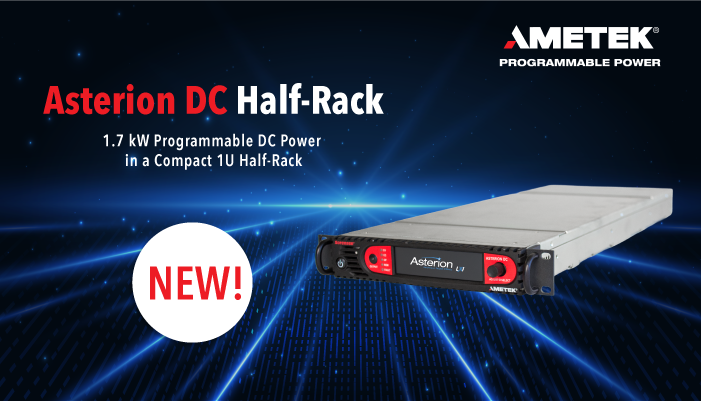

In-depth technical guides, engineering innovations, and testing methodologies from AMETEK Programmable Power specialists.
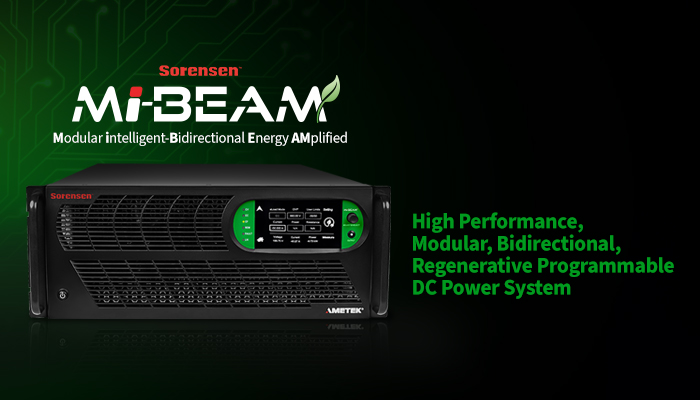
Discover best practices for bidirectional power supply integration and regenerative grid simulation testing.
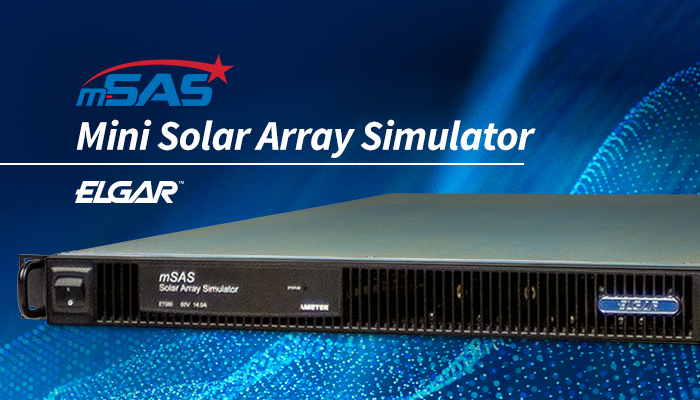
Learn how advanced MPPT algorithms and solar array simulators improve power subsystem testing for aerospace applications.
Global buyers need more than a product label when selecting Air-Cooled Electronic Loads. They need dependable testing, clear specifications, and practical evidence from real operating conditions. A suitable load should handle voltage, current, power, duty cycle, and thermal stress without creating unnecessary uncertainty.
Dr. Steven M. Sandler, a respected power-integrity and electronic-test specialist, often emphasizes a practical engineering principle: “Measure the system, not just the component.” That idea matters here. An electronic load may show accurate readings on a clean laboratory bench, yet behave differently near a factory inverter, battery rack, or industrial power supply. Cooling airflow can also change results. A blocked intake, dusty filter, or warm enclosure may reduce performance within minutes.
Reliable suppliers should provide efficiency data, protection functions, calibration details, and temperature derating curves. Buyers should also ask how the equipment performs during long-duration tests. Short demonstrations can hide weaknesses. That is easy to overlook.
Air-Cooled Electronic Loads remain attractive because they avoid chilled-water systems and simplify installation. They can support battery validation, power-converter development, renewable-energy equipment, and production testing. However, air cooling is not automatically effortless. Fan noise, airflow direction, maintenance access, and heat rejection require careful planning.
This guide examines leading options for international buyers. It considers technical capability, usability, service support, documentation quality, and total ownership cost. Some comparisons may remain imperfect because manufacturers publish data differently. That limitation deserves attention. A careful buyer should verify critical claims with witnessed testing, sample units, and application-specific calculations before placing a large order.
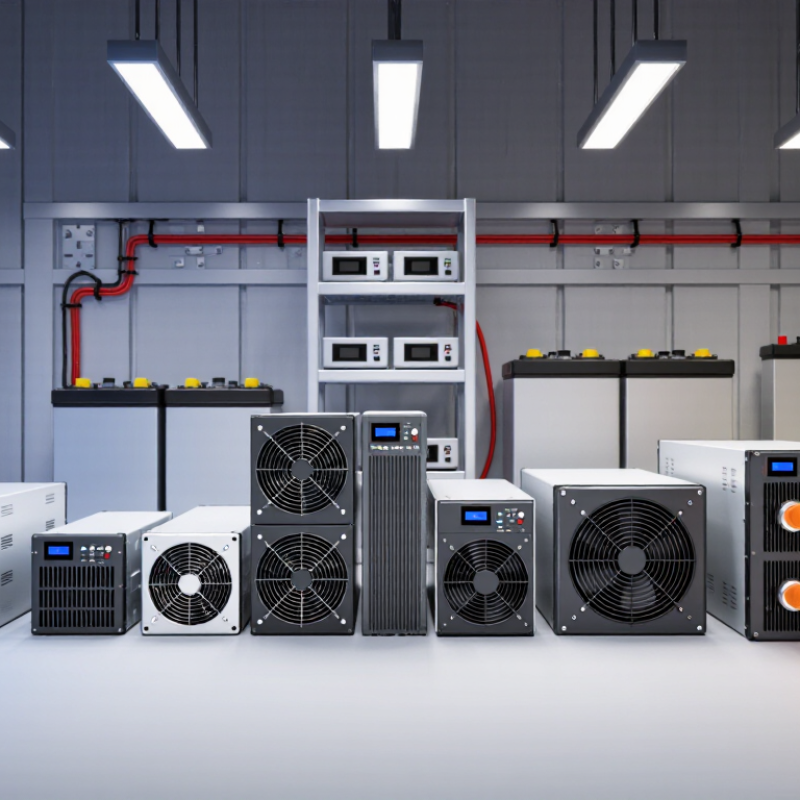
Air-cooled electronic loads are test instruments that imitate the electrical behavior of real equipment. They absorb power from a source, then convert most of that energy into heat. Instead of using motors, lamps, or batteries, they use controlled semiconductor circuits. These circuits can reproduce constant resistance, constant current, constant power, or changing load profiles. A built-in fan pushes air across heat sinks to remove the generated heat.
During bench testing, engineers connect the load to a power supply, inverter, battery, or charging system. The control system measures voltage and current many times per second. It then adjusts switching devices to maintain the selected operating value. For example, a 2,000-watt setting may draw more current when voltage falls. This helps reveal weak regulation, overheating, ripple, and protection faults. It also makes repeatable testing easier than using improvised resistors.
Air cooling keeps the equipment compact and avoids water plumbing, but it creates noise and demands clean airflow. Dust on the intake can raise internal temperatures faster than expected. A practical inspection should include fan operation, filter condition, cable size, and terminal tightness. Leave space around the exhaust. That detail is often missed.
When comparing models, buyers should check voltage range, current limit, power rating, transient response, control interfaces, and protection functions. Ratings may apply only at a specified ambient temperature. This is where specifications can feel less clear. A careful buyer should verify derating curves and test conditions before placing an order.
Air-cooled electronic loads are programmable test instruments that convert electrical power into heat and remove that heat with forced air. The specifications below represent commonly available configurations and practical selection ranges; exact performance depends on the selected model and operating conditions.
| Selection Dimension | Typical Specification or Range | How It Works | Buyer Relevance |
|---|---|---|---|
| Product Type | Programmable DC electronic load, AC electronic load, or combined AC/DC platform | Power semiconductors regulate current electronically instead of using only fixed resistors. | The input type must match the power source being tested. |
| Cooling Method | Forced-air cooling using internal fans, heat sinks, and ventilation channels | Fans move ambient air across heat sinks to remove the heat created by absorbed electrical power. | Requires adequate airflow clearance and a suitable ambient temperature. |
| Common DC Power Class | Approximately 150 W to 6 kW for bench and compact rack applications; higher ratings are also available. | The load dissipates the programmed power as heat while maintaining the selected operating point. | Choose continuous power above the test requirement, with margin for transients. |
| Typical DC Voltage Range | Low-voltage versions commonly cover 0 to 60 V DC; other configurations may extend to 150 V, 600 V, or more. | The input stage measures voltage and adjusts semiconductor conduction to control current. | Select a voltage rating higher than the source’s maximum output, including overshoot. |
| Constant Current Mode | Maintains a programmed current, subject to the instrument’s voltage, power, and current limits. | A feedback loop changes load resistance electronically as source voltage changes. | Useful for battery discharge, adapter testing, and current-limit verification. |
| Constant Resistance Mode | Simulates a specified resistance over the instrument’s supported operating area. | The load varies current approximately in proportion to the applied voltage. | Suitable for source behavior tests where a resistive load is required. |
| Constant Voltage Mode | Maintains a programmed voltage by drawing the current required by the source, within limits. | The control loop increases or decreases current demand to hold the measured input voltage. | Useful for evaluating current capability and voltage regulation of power supplies. |
| Constant Power Mode | Maintains a programmed power level by dynamically adjusting current as voltage changes. | Current is controlled approximately according to the relationship P = V × I. | Helpful for battery, converter, and power-source tests that require a controlled power profile. |
| Dynamic Load Operation | Programmable current or power steps with timing controlled in milliseconds or microseconds, depending on design. | The control circuit rapidly switches between preset load levels. | Used to evaluate transient response, recovery time, and control-loop stability. |
| Current Capacity | Common bench instruments range from a few amperes to more than 100 A, depending on voltage and power rating. | Parallel semiconductor paths and heavy-current terminals carry the programmed load current. | Check continuous current, peak current, connector rating, and cable size separately. |
| Measurement Functions | Voltage, current, power, elapsed time, and resistance; some instruments also calculate energy and capacity. | Internal measurement circuits sample the input and report values locally or through a control interface. | Integrated measurements reduce external equipment requirements during routine testing. |
| Remote Interfaces | USB, Ethernet, RS-232, or isolated analog control are common options; availability varies by configuration. | Commands and measured data are exchanged between the load and a computer or automated test system. | Confirm communication protocols, isolation, software support, and data-export requirements. |
| Protection Features | Over-voltage, over-current, over-power, over-temperature, reverse-polarity, and fan-failure protection may be included. | Protective circuits reduce or disconnect the load when unsafe operating conditions are detected. | Verify the protection thresholds, response behavior, reset method, and alarm indication. |
| Operating Environment | Many instruments are specified for controlled indoor use around 0–40 °C, but the exact range is model-specific. | Ambient air temperature affects heat-sink temperature, fan demand, and available power derating. | Allow ventilation space and account for altitude, dust, humidity, and room temperature. |
| Typical Applications | Power supplies, batteries, chargers, photovoltaic converters, fuel-cell systems, adapters, and DC converters | The load provides repeatable electrical demand for characterization, validation, production, and service testing. | Match the load’s voltage, current, power, mode, and transient performance to the test objective. |
| Main Advantages | Programmable operation, repeatable test conditions, compact installation, and lower maintenance than liquid-cooled systems | Electronic control provides adjustable load behavior without physically changing resistive components. | A practical choice for laboratories, repair facilities, educational use, and automated test lines. |
| Important Limitations | Fan noise, heat release into the room, power derating at elevated temperature, and limited maximum dissipation compared with large liquid-cooled systems | All absorbed electrical power ultimately becomes heat that must be removed from the test area. | Plan room cooling, airflow, acoustic conditions, and duty cycle before purchase. |
Buyer checklist: Confirm maximum voltage, continuous and peak current, continuous power, operating modes, dynamic response, measurement accuracy, protection functions, communication interfaces, cooling airflow, environmental limits, and applicable electrical safety requirements.
It is a test instrument that imitates real electrical equipment. It absorbs power and converts most of it into heat. Controlled semiconductor circuits create the selected load behavior.
It connects to a power supply, inverter, battery, or charging system. Sensors measure voltage and current repeatedly. The control system adjusts switching devices to hold the chosen value.
Common modes include constant current, constant resistance, and constant power. Some units also reproduce changing load profiles. Constant power may draw more current when voltage falls.
A built-in fan moves air across heat sinks. This removes generated heat without water plumbing. The design stays compact, but fan noise and dust become practical concerns.
Keep the air intake clean and leave clear space around the exhaust. Check fan operation, filters, cable size, and terminal tightness. Small gaps matter.
Not always. Power limits may depend on voltage, ambient temperature, pulse duration, and duty cycle. Review the operating envelope and derating curve carefully.
Compare continuous power, pulse power, voltage range, current limit, and control accuracy. For dynamic tests, review rise time, fall time, slew rate, and repetition limits.
Record calibration information and use consistent remote-control settings. During acceptance testing, place a temperature probe near the exhaust. Wait for thermal stabilization before recording readings.
Useful safeguards include overvoltage, overcurrent, overheating, and reverse-polarity protection. Confirm how each function reacts. The specification may not explain every response clearly.
Watch for excessive exhaust temperature, unstable current, ripple, or unexpected shutdowns. A high peak-power figure may hide poor long-duration performance. I would inspect pulse duration twice.
Air-Cooled Electronic Loads are test instruments that safely absorb electrical power and convert it into heat, which is removed by built-in fans or forced-air systems. They allow engineers to simulate real-world loads when evaluating power supplies, batteries, converters, chargers, and other electrical equipment. When comparing models, buyers should consider voltage and current range, maximum power, operating modes, load accuracy, control resolution, transient response, cooling capacity, noise level, display functions, and communication interfaces. Common options include DC loads, AC loads, programmable loads, regenerative alternatives, and modular systems designed for different testing environments.
Selecting the right load depends on the application, required test profiles, power level, duty cycle, portability, automation needs, and available space. Users should also review over-temperature, over-voltage, over-current, and short-circuit protection, along with ventilation requirements and maintenance procedures. For international purchasing, attention should be given to electrical safety, electromagnetic compatibility, documentation, certification requirements, input voltage compatibility, warranty support, shipping conditions, and local service availability. A careful comparison helps global buyers achieve reliable, repeatable, and safe testing performance.