
Executive Summary & Semantic Definition
What is a Bidirectional Regenerative Power System? A bidirectional regenerative power system is an advanced power conversion instrument capable of both sourcing electrical power (acting as a programmable DC/AC power supply) and absorbing electrical power (acting as a programmable electronic load) within a single unified enclosure. Unlike traditional dissipative loads that convert excess electrical energy into waste heat, a regenerative system utilizes an Active Front End (AFE) inverter stage to invert consumed DC or AC energy back into clean, grid-compliant AC electricity with thermal energy recovery efficiencies typically exceeding 92% to 96%. These systems are critical for high-voltage EV battery pack cycling, traction inverter testing, microgrid simulation, and bidirectional V2G (Vehicle-to-Grid) hardware-in-the-loop (HIL) validation.
1. The Paradigm Shift in High-Power Test Infrastructure: Energy Recovery vs. Thermal Dissipation
In modern industrial test environments—ranging from EV battery formation labs to aerospace power subsystem validation facilities—test power requirements have escalated from tens of kilowatts to multi-megawatt scales. Historically, testing energy storage systems (ESS) or electric powertrains required separate programmable DC power supplies for charging and massive resistive or air-cooled electronic loads for discharging.
This dual-instrument setup presented severe operational bottlenecks:
- Excessive Operational Cost (OPEX): 100 kW of discharge power converted to thermal heat requires approximately 28.4 tons of chiller capacity (HVAC), doubling electricity charges (power consumed during discharge plus power consumed to cool the facility).
- Floor Space Constraints: Conventional resistive load banks consume expansive rack footprints, severely reducing laboratory power density (kW per square meter).
- Cross-Zero Transient Delays: Relaying between a discrete power supply and a load introduces mechanical contactor switching latencies (typically 50 ms to 500 ms), making real-time dynamic drive-cycle emulation (e.g., WLTP, US06) impossible.
Total Cost of Ownership (TCO) & HVAC Cost Recovery Model
To evaluate the direct financial impact of switching from traditional resistive loads to an AMETEK Regenerative System, apply the following industry standard ROI formula:
Annual Savings ($) = [ P_test × Hours × Efficiency_regen × Electricity_Cost ] + [ (P_test × Hours / 3.517) × HVAC_COP_Cost ]Where: P_test = Average continuous discharge power (kW); Efficiency_regen = Energy feedback efficiency ratio (0.95); 3.517 = kW to Tons of Air Conditioning conversion factor.
Real-World Example: Testing an 800V EV battery pack continuously at 150 kW for 4,000 operational hours per year at an industrial electricity rate of $0.15/kWh yields over $118,500 in direct electricity and HVAC operational cost savings annually per test channel, amortizing system capital expenditure (CAPEX) in under 14 months.
2. Architectural Deep-Dive: Silicon Carbide (SiC) Topologies & Closed-Loop Grid Feedback
The engineering superiority of AMETEK Programmable Power's bidirectional platforms stems from Next-Generation Wide Bandgap (WBG) Semiconductor topologies, primarily Silicon Carbide (SiC) MOSFETs operating at high switching frequencies (up to 100 kHz+).
Compared to legacy Silicon IGBT-based architectures, SiC-enabled bidirectional systems offer:
- Ultra-Low Dynamic Switching Losses: High switching speeds minimize switching transitions, pushing conversion efficiency past 96% across a broad power band (from 20% load to 100% full rating).
- Superior Dynamic Response & Slew Rates: Voltage step rise times under 1 millisecond and current response times under 2 milliseconds enable precise emulation of fast transient spikes, micro-grid short circuits, and regenerative braking pulses.
- Total Harmonic Distortion (THD) < 1.5%: Integrated Active Front End (AFE) filter networks ensure that energy reinjected into the facility’s main AC distribution grid maintains exceptionally clean sine-wave fidelity, meeting stringent utility interconnect regulations without disturbing neighboring sensitive laboratory equipment.
Architecture Comparison: Legacy Dissipative vs. Advanced Bidirectional Systems
| Performance Metric | Legacy Resistive / Electronic Load | Standard IGBT Regenerative | AMETEK SiC Bidirectional System |
|---|---|---|---|
| Energy Recovery Efficiency | 0% (100% Thermal Waste) | 85% - 89% | > 96% Peak Efficiency |
| Source-to-Sink Transition Latency | > 100 ms (Relay Switching) | 10 ms - 30 ms | < 1 ms Continuous Cross-Zero |
| Power Density (kW per 3U Rack) | 3 kW - 5 kW / 3U | 10 kW - 15 kW / 3U | Up to 37 kW / 3U (Mi-BEAM Series) |
| Grid Feedback THD | N/A (Sinks Energy Only) | < 5% THD | < 1.5% Ultra-Clean THD |
| Grid Interconnect Safety | None Required | Basic Isolation | Certified Anti-Islanding IEEE 1547 |
For custom rack configurations or specific grid voltage requirements, consult directly with our application engineering team: Inquire Now.
3. AMETEK Flagship Bidirectional Regenerative Product Portfolio
AMETEK Programmable Power leads the global test and measurement industry with field-proven bidirectional product families engineered specifically for demanding automotive, aerospace, grid simulation, and renewable energy test routines.
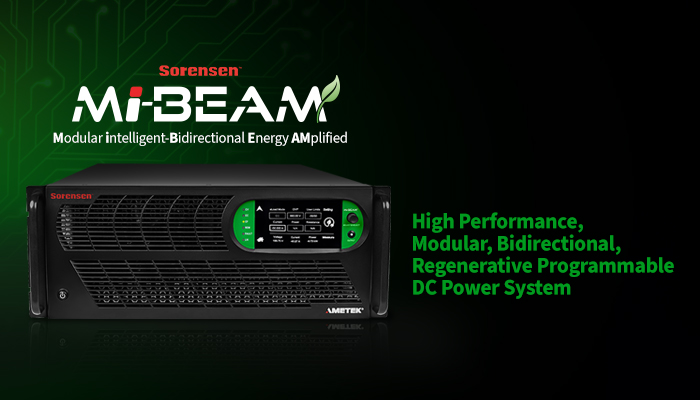
Mi-BEAM Series
Modular Bidirectional Energy Amplified DC System engineered for high-density EV battery cycling and drive-train validation.
- Power Level: 12 kW to 37 kW (3U)
- Voltage Range: Up to 2,000 VDC
- Scalability: Parallelable to 1.2 MW+
- Regen Efficiency: Up to 96%
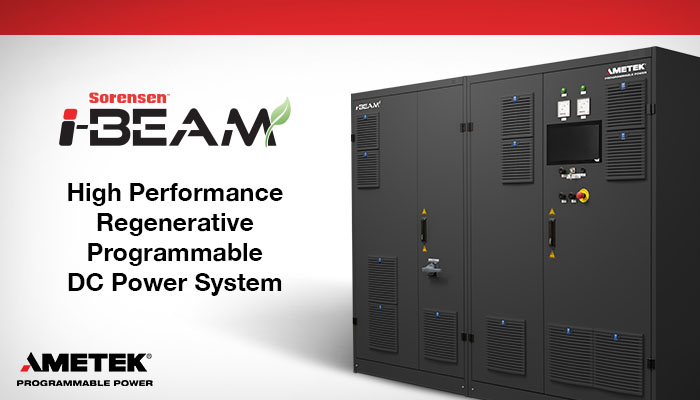
i-BEAM Series
High-Power Bidirectional DC power platform delivering massive current capability for large-scale energy storage and traction testing.
- Current Range: Up to 1,000 A per unit
- Power Options: 60 kW to 1.3 MW
- Control Interface: EtherNet/IP, CAN, SCPI
- Enclosure: Ruggedized Cabinet
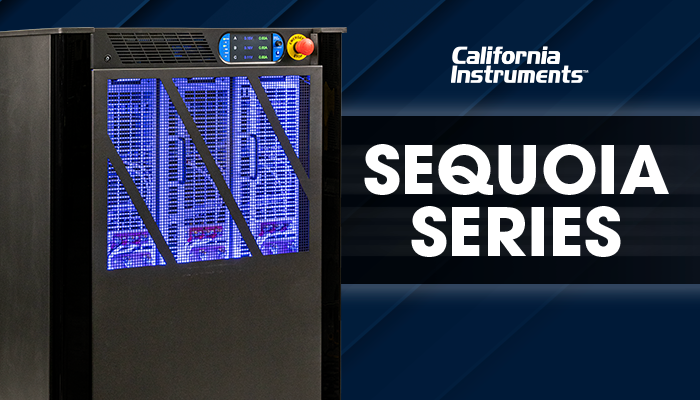
Sequoia Series
Four-Quadrant Regenerative AC/DC Grid Simulator combining high power density with advanced grid-tie compliance testing capability.
- Power Ratings: 15 kVA to 1 MVA+
- Operation Mode: 4-Quadrant AC & DC
- Grid Compliance: IEEE 1547 / UL 1741
- Bandwidth: DC to 900 Hz Output
4. Procurement Roadmap: Future Industry Trends (2026–2030)
Global procurement teams and laboratory directors must design test facilities with future-proof capabilities. Key industry macro-trends influencing bidirectional system specifications include:
Trend 1: Transition to 800V, 1000V, and 1500V Electric Vehicle Architectures
Next-generation passenger EVs, commercial haulers, and eVTOL aircraft are standardizing on bus voltages between 800V and 1500V to enable 350kW+ ultra-fast charging. Test equipment must feature broad autoranging constant-power voltage curves, allowing a single 1500V bidirectional unit to supply high current at lower voltages (e.g., 400V battery testing) without requiring redundant instrumentation.
Trend 2: Hardware-in-the-Loop (HIL) Integration via Ultra-Low Latency Fieldbuses
Modern automotive and aerospace OEM testing relies heavily on real-time digital simulators (such as dSPACE, OPAL-RT, or RTDS). Bidirectional power supplies now act as physical power actuators in HIL loops. AMETEK platforms support high-speed EtherCAT and CAN FD communications with update rates below 1 millisecond, guaranteeing synchronous co-simulation between software models and physical hardware under test.
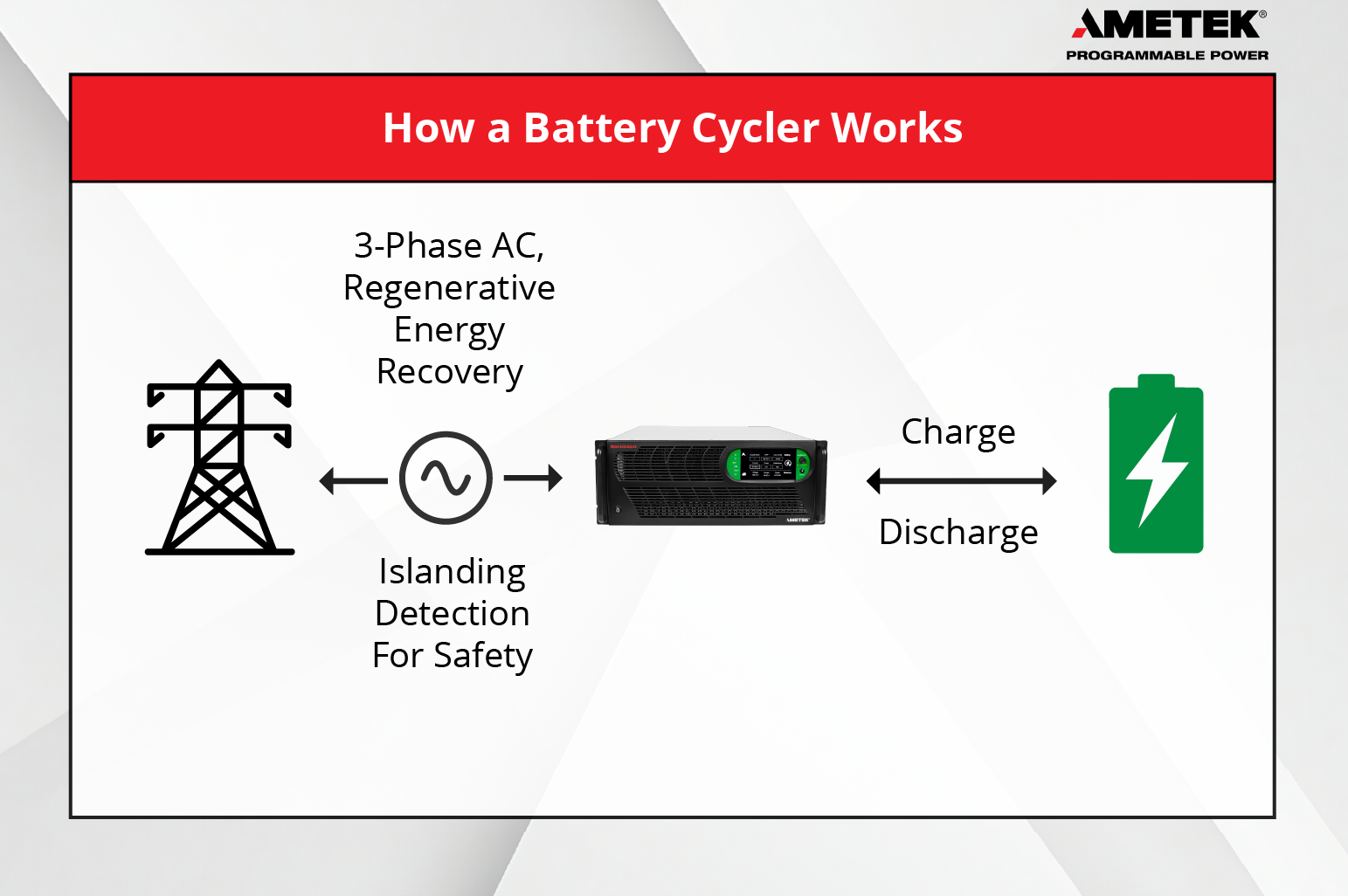
Trend 3: Strict Grid Interconnect & Anti-Islanding Standards
As laboratories feed multi-megawatts back into utility power grids, local grid operators mandate compliance with international safety codes (such as IEEE 1547.1, UL 1741 SA, and VDE-AR-N 4105). AMETEK regenerative supplies incorporate hardware-redundant loss-of-mains (LOM) detection and certified anti-islanding isolation relays, preventing dangerous back-feeding during utility power outages.
5. Global Buyer & Engineering FAQ
A seamless cross-zero transition allows the power system to switch from sourcing current (delivering power to a device under test) to sinking current (absorbing power from a device under test) without mechanical contactor interruption or output voltage degradation. Internal digital signal processors (DSPs) smoothly control the direction of current vector flow in real-time within micro-seconds. This is vital for simulating rapid electric vehicle regenerative braking scenarios where an electric motor instantly switches from consuming battery energy to generating surge currents back into the battery pack.
Operating a high-power regenerative system requires a 3-phase AC utility connection (commonly 380VAC, 400VAC, 480VAC, or 600VAC at 50/60Hz). Because the unit feeds energy back into the facility’s electrical distribution panel, the main circuit breaker and transformer must be sized for bidirectional current flow. AMETEK supplies include soft-start circuitry, power factor correction (>0.99), and built-in isolation contactors compliant with national electrical codes.
Yes. All standard AMETEK bidirectional systems (such as the Mi-BEAM and i-BEAM series) feature built-in programmable internal resistance mode (Rint). This allows test engineers to dynamically simulate changing battery state-of-charge (SoC), aging effects (SoH), temperature coefficients, and internal chemistry impedance during motor drive testing or solar inverter maximum power point tracking (MPPT) validation.
AMETEK regenerative supplies utilize advanced active pulse-width modulation (PWM) Active Front End (AFE) inverters combined with multi-stage EMI filters. This design ensures that the reinjected current features a near-perfect sinusoidal waveform with Total Harmonic Distortion (THD) below 1.5% to 2.5%, well within IEEE 519 standards. Consequently, neighboring precision measurement devices, oscilloscopes, and data acquisition hardware suffer zero harmonic interference.
Absolutely. AMETEK's proprietary master-slave digital bus architecture enables quick paralleling of multiple units. For instance, several 37 kW Mi-BEAM modules can be connected in parallel within a single rack enclosure to act as a unified, deterministic 300 kW, 600 kW, or 1.2 MW power engine with full synchronization and fast dynamic load sharing.
Protecting irreplaceable prototype battery packs, fuel cells, or aerospace components is paramount. AMETEK systems incorporate multi-layered hardware and firmware protection features, including Over-Voltage Protection (OVP), Over-Current Protection (OCP), Over-Power Protection (OPP), Under-Voltage Limiters, Emergency Off (EMO) interlocks, and user-configurable voltage/current ramp rate limits.
6. Enterprise Advantage: Why Global Fortune 500 OEMs Choose AMETEK Programmable Power
With over 50 years of leadership in test and measurement power electronics, AMETEK Programmable Power brings together the industry’s most respected heritage brands: California Instruments, Sorensen, Elgar, and Amrel.

When you select AMETEK as your strategic power partner, you gain access to unmatched global enterprise capabilities:
- AS9100D & ISO 9001:2015 Certified Manufacturing: All products are engineered and manufactured under stringent quality management systems meeting the highest aerospace, automotive, and defense standards.
- Global Calibration & Service Network: Through key global partnerships (including our calibration partnership with Transcat), AMETEK offers localized maintenance, ISO/IEC 17025 accredited calibration, and rapid spare-parts replacement across North America, Europe, and Asia-Pacific.
- Custom Systems Engineering: Beyond standalone bench or rack instruments, our turnkey engineering team designs fully integrated, liquid-cooled, or air-cooled power cabinets complete with safety PLCs, custom cabling, and automated test software.