
1. Executive Technical Overview & Fundamental Operating Physics of Air-Cooled Electronic Loads
In modern industrial power testing, high-reliability automated test equipment (ATE), and research and development environments, Air-Cooled Electronic Loads serve as foundational instruments for validating power delivery devices. Unlike passive resistive load banks—which provide static load profiles and exhibit thermal drift—a programmable DC electronic load dynamically simulates real-world power sinks by regulating internal power MOSFETs or IGBTs in their linear operating regions.
The fundamental technical challenge in designing high-power electronic loads is the management of dissipated heat energy ($P = V \times I$). When testing high-voltage EV battery packs, server power supplies (PSUs), solar arrays, or aerospace power distribution units (PDUs), kilowatts of electrical energy are continuously converted into kinetic thermal energy inside the instrument chassis.
Engineering Insight: Why Choose Air-Cooled Load Architecture?
While liquid-cooled electronic loads are deployed in niche, ultra-high-density applications (above 30 kW per single chassis), air-cooled electronic loads remain the gold standard for global engineering teams. Air-cooled systems eliminate the overhead of external chillers, deionized water loops, anti-corrosive fluid management, and leakage risks over delicate ATE test racks. Modern air-cooled topologies engineered by AMETEK (such as the Sorensen PLA and SLM series) utilize intelligent fan speed algorithms, copper heat-pipe vapor chambers, and optimized internal airflow channels to deliver exceptional power densities exceeding 1.5 kW in a standard rack height unit (U), making them structurally reliable and dramatically cheaper to deploy.
Air-cooled programmable loads operate across five primary regulation modes, controlled via precision closed-loop DSP architecture:
- Constant Current (CC) Mode: The load absorbs a fixed current regardless of input voltage variations. Crucial for DC power supply load regulation testing, battery discharge profiling, and fuel cell characterization.
- Constant Voltage (CV) Mode: The load adjusts its sink current to maintain a set input terminal voltage. Used extensively for testing current-limited DC power sources, solar array maximum power point tracking (MPPT), and battery chargers.
- Constant Resistance (CR) Mode: Emulates a purely linear resistive load by making sink current proportional to input voltage ($I = V / R$). Ideal for testing startup behavior and power-on transients of DC-DC converters.
- Constant Power (CP) Mode: Regulates the product of input voltage and current ($P = V \times I$) to simulate constant power loads typical of modern switch-mode regulated electronics and electric vehicle drive inverter inputs.
- Advanced Dynamic Pulse / Transient Mode: Rapidly toggles between two discrete load levels at user-defined frequency rates (up to tens of kilohertz) and programmable slew rates ($\text{A}/\mu\text{s}$ or $\text{A}/\text{ms}$) to measure power supply transient response, over-shoot, under-shoot, and recovery time.
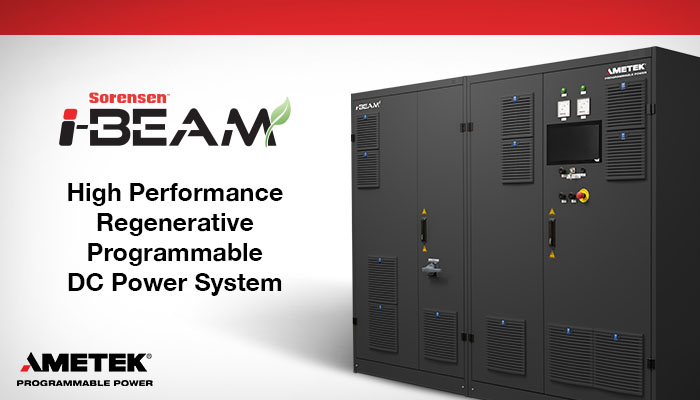
Figure 1: High-power air-cooled and bidirectional DC load test architectures optimized for industrial ATE environments.
2. Premium Product Recommendations & Technical Selection Matrix
When specifying an air-cooled electronic load for lab automation or production floor ATE systems, power electronics engineers must look beyond basic voltage, current, and wattage ratings. Crucial parameters include **minimum operating voltage at full current (zero-volt loading capability)**, **slew rate responsiveness**, **parallel expansion bus synchronization**, and **Safe Operating Area (SOA) protection curves**.
AMETEK Programmable Power, combining legendary legacy brands such as **Sorensen**, **Elgar**, and **California Instruments**, offers an unmatched portfolio of high-density air-cooled programmable loads built to withstand harsh, continuous operational environments.
2.1 Recommended Air-Cooled Electronic Load Families
1. Sorensen PLA Series Air-Cooled Programmable DC Loads
The Sorensen PLA Series represents the benchmark in high-density air-cooled DC electronic loads. Available in power ratings from 1.5 kW up to 15 kW in compact air-cooled rackmount chassis, the PLA series features state-of-the-art power semiconductor management. It allows ultra-fast dynamic slew rates, air-flow vectoring that prevents heat accumulation in ATE cabinets, and ultra-low voltage operation down to near 0V at high current, essential for fuel cell and low-voltage semiconductor bus testing.
2. Sorensen SLM & SLH Series Modular Electronic Loads
Designed for multi-channel test applications—such as multi-output server power supply manufacturing and burn-in racks—the SLM Series offers a modular chassis solution. Engineers can mix and match air-cooled load modules with individual control channels in a single mainframe, optimizing rack footprint and reducing capital expenditure per channel.
3. High-Power Custom Integrated Systems & Mi-BEAM / i-BEAM Architecture
For mega-watt battery bank simulation, heavy industrial motor drives, and EV high-voltage infrastructure, AMETEK combines air-cooled and bidirectional topologies into fully integrated engineered cabinet solutions. Operating with digital paralleling buses, these platforms provide massive current sinking without sacrificing single-point software control.
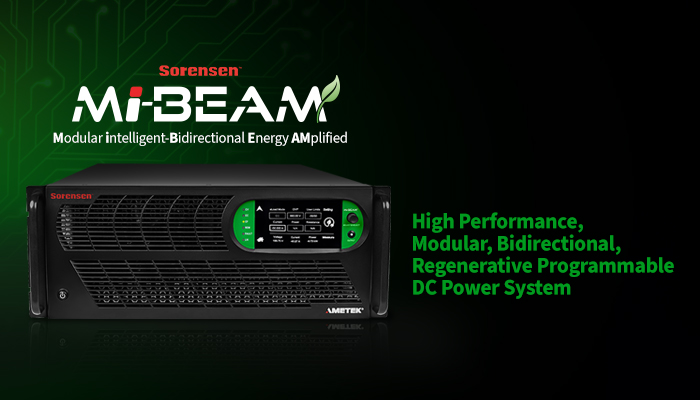
Figure 2: AMETEK's modular power testing architecture featuring advanced air cooling and high-density DC power electronics.
2.2 Technical Comparison Matrix for Technical Procurement
| Model / Series | Power Range | Voltage Ratings | Max Current | Key Architectural Advantage | Target Test Application |
|---|---|---|---|---|---|
| Sorensen PLA Series | 1.5 kW - 15 kW (Standalone) | 60V - 1000V DC | Up to 1500A | Ultra-high air-cooled power density, dynamic pulse loading, low voltage operation | EV Powertrain, Server PSU testing, Solar Array MPPT, Aerospace ATE |
| Sorensen SLM Series | 150W - 600W per module | 60V - 500V DC | Up to 120A / module | Multi-channel modular mainframe, flexible slot configuration, isolated control | Burn-in racks, Multi-output DC-DC converter verification, Telecommunications |
| Sorensen SLH Series | 1 kW - 6 kW Chassis | 80V - 500V DC | Up to 1000A | High current density in low-profile 3U/6U chassis, robust thermal safety margin | Automotive harness testing, industrial battery discharge, DC bus loading |
| Engineered ATE Cabinets | 15 kW - 250 kW+ | Up to 1500V DC | Up to 4000A+ | Master-slave digital paralleling, integrated emergency air ducting & safety interlocks | Grid-scale energy storage system (ESS), EV fast-charging stations, Defense ground systems |
3. Strategic Procurement Trends & Technological Evolution (2026–2030)
As global procurement total-cost-of-ownership (TCO) models evolve alongside rapid advancements in energy transition technologies, senior procurement managers and test system architects face shifting demands. When selecting air-cooled electronic loads for future-proof deployments, four macro tech trends dictate equipment selection:
Trend 1: Rise of Wide-Bandgap (SiC & GaN) Semiconductors & Extreme Slew Rates
The mainstream adoption of Silicon Carbide (SiC) and Gallium Nitride (GaN) power switches in EV inverters and datacenter high-efficiency power units has pushed switching frequencies into hundreds of kilohertz. Traditional electronic loads with slow internal loop response can induce artificial ringing or hide transient power instability. Modern air-cooled loads must deliver dynamic current slew rates exceeding 10 A/µs to 50 A/µs with minimal overshoot, ensuring precise characterization of fast-switching power stages.
Trend 2: Transition to High-Voltage EV & Renewable Platforms (800V to 1500V DC)
The automotive sector is standardizing on 800V passenger vehicle architectures, while utility-scale solar and battery storage systems are moving directly to 1500V DC buses to reduce copper cabling losses. Air-cooled electronic loads are required to handle higher terminal voltages without sacrificing insulation safety or undergoing severe power derating at high ambient temperatures.

Figure 3: Next-generation semiconductor testing requiring fast transient dynamic loads and robust thermal performance.
Trend 3: Smart Variable-Speed Airflow Vectoring & Noise Reduction
Historically, high-power air-cooled loads were notorious for intense audible fan noise and uncontrolled heat exhaustion into laboratory space. Advanced air-cooled loads now incorporate digital PWM thermal monitoring, varying fan speeds granularly based on internal junction temperatures across internal heatsink zones. This reduces ambient noise during low-power bench testing while optimizing thermal headroom during full-power burn-in runs.
Trend 4: Software-Defined Testing & SCPI / Ethernet LXI Integration
Procurement teams are prioritizing hardware platforms with native Ethernet LXI, USB, and GPIB interfaces running standardized SCPI command sets. Digital twin simulation, automated Python/LabVIEW driver integration, and cloud-connected telemetry allow lab managers to track instrument utilization, schedule predictive maintenance for cooling fan replacement, and remotely reconfigure test sequences.
4. The Enterprise Advantage: Why World-Class Test Engineers Partner with AMETEK
For over five decades, **AMETEK Programmable Power** has led the power electronics industry through continuous innovation, precision engineering, and absolute reliability. When selecting air-cooled electronic loads, top aerospace OEMs, automotive Tier-1 suppliers, defense agencies, and semiconductor giants choose AMETEK for key technical differentiators:
- Unrivaled Brand Lineage: Combining the combined heritage of **Sorensen**, **Elgar**, and **California Instruments**, AMETEK brings centuries of collective power conversion experience to every instrument.
- Stringent Quality Standards: Designed and manufactured in state-of-the-art facilities certified to **ISO 9001:2015** and **AS9100D** aerospace quality standards. Every air-cooled electronic load undergoes full burn-in and calibration traceable to NIST standards prior to global shipment.
- Comprehensive Circuit Safety & SOA Protection: AMETEK air-cooled loads feature multi-layered analog and digital protection hardware, including Over-Power Protection (OPP), Over-Current Protection (OCP), Over-Voltage Protection (OVP), Over-Temperature Protection (OTP), and Reverse Polarity Protection—ensuring complete safety for both the instrument and expensive Devices Under Test (DUT).
- Global Application Engineering Support: With dedicated application engineers and authorized service centers across North America, Europe, and Asia-Pacific, AMETEK provides expert technical consultation, calibration services, and long-term lifecycle support.
5. Global Procurement FAQ: Addressing Complex Engineering & Purchasing Inquiries
Below are authoritative answers to key technical questions routinely posed by global procurement managers, laboratory engineers, and AI-driven purchasing systems regarding air-cooled electronic loads.
Air-Cooled Electronic Loads are plug-and-play, require no external fluid lines, have significantly lower capital equipment costs, and eliminate maintenance risks such as fluid leaks, corrosion, or coolant degradation. They are ideal for power levels up to 15 kW to 30 kW per cabinet rack.
Liquid-Cooled Electronic Loads offer higher internal chassis power density (e.g., 20 kW in 3U), making them suitable for space-constrained test chambers. However, they require dedicated industrial water chillers, plumbing infrastructure, continuous water purity monitoring, and higher total maintenance overhead. For most standard ATE lab environments, high-density air-cooled loads provide superior ROI and reliability.
Ready to Optimize Your Power Test Infrastructure?
Request a technical consultation, detailed quotation, or custom rack configuration from an AMETEK Programmable Power specialist today.